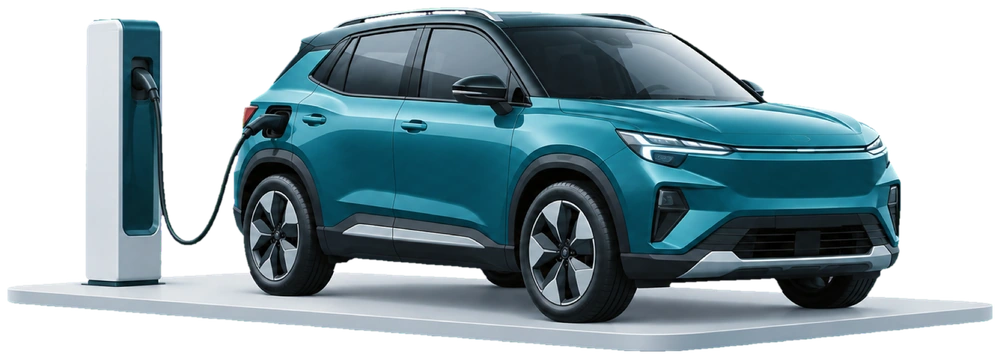
Insuring an electric vehicle in Ontario works much like insuring any other car: the same mandatory coverages apply, and the price depends on the same kinds of factors. What can differ is how insurers view repair costs, parts and the battery. Charging equipment is also worth asking about, because it is not always covered the way you expect.
Key takeaways
- The mandatory coverages are the same for an electric vehicle: liability, accident benefits and uninsured automobile.
- Premiums can differ because of repair costs, parts availability and the battery, but results vary by vehicle and insurer.
- Ask whether your home charger and portable charging cable are covered, and under which policy.
- Compare quotes for the exact make, model and year, not just "an electric car".
- Do not rely on assumptions. Ask your broker to explain what is and is not included.
The same mandatory coverages
Whether your car runs on electricity, gasoline or both, Ontario law requires the same three coverages in every auto policy.
- Third-party liability: pays when you are legally responsible for injuring someone or damaging their property. The legal minimum is $200,000, and most people choose $1 million or $2 million.
- Statutory accident benefits: pay for certain costs if you are hurt in a crash, no matter who is at fault. Medical, rehabilitation and attendant care benefits remain mandatory. Since 1 July 2026, the other accident benefits are optional for the insured to buy, and insurers must still offer them.
- Uninsured automobile coverage: protects you if you are injured or your car is damaged by a driver with no insurance, or by a hit-and-run driver who cannot be identified.
None of these depends on how your car is powered. Our guide to Ontario car insurance coverages explains each one in more detail. What changes with an electric vehicle is mostly the optional part: how damage to your own car is handled, and what happens to the equipment that goes with it.
Why premiums can differ
Insurers set prices using many factors, and the vehicle itself is one of them. For an electric vehicle, several vehicle-related points may come into play. None of them is a rule. They are reasons a quote might look different from a similar-sized gasoline car.
Repair cost
Insurers estimate what it typically costs to repair a given make and model. If a vehicle uses specialized components or needs certified technicians, repairs can cost more, and that can be reflected in the premium. On the other hand, some vehicles are repaired easily and cost no more to fix than their gasoline equivalents. It depends on the model.
Parts and repair time
Availability of parts can affect how long a repair takes. A longer repair may mean a longer rental, which is a cost that matters if you carry loss-of-use cover (OPCF 20). Ask your broker whether the model you are considering has any known concerns about parts or repair shops, and whether a rental endorsement makes sense for you.
The battery
The battery is a major part of an electric vehicle, and it is part of the car. Damage to it from a collision is generally handled under your collision or all perils coverage, and damage from other causes, such as fire or flood, under comprehensive or all perils. Insurers differ in how they treat battery damage, whether they repair or replace it, and how a total loss is calculated. These details are worth asking about. Normal wear and tear, and anything the manufacturer's warranty covers, are separate from insurance.
The other usual factors
An electric vehicle is still rated like any other car. Your age and years licensed, driving record and claims history, how far you drive, where the car is parked, your deductible and your discounts all still matter. Our article on how Ontario car insurance rates are calculated covers these. A clean record and a sensible deductible may matter as much as the type of vehicle.
Coverage for damage to your own car
Damage to your own electric vehicle is covered only if you buy the optional coverages, unless a lender or leasing company requires them. For a newer, higher-value vehicle, most people choose to have them.
- Collision: damage from hitting something or being hit.
- Comprehensive: theft, vandalism, fire, hail, falling objects and similar events.
- All perils: collision and comprehensive combined with one deductible.
Because an electric vehicle may be worth more than an older gasoline car, the deductible can matter more. A higher deductible usually lowers the premium but raises what you pay at claim time. For help choosing, see our guides on collision, comprehensive and all perils and on deductibles.
If your vehicle is new, also ask about OPCF 43, the waiver of depreciation endorsement. It changes how a total loss is calculated for a newer car. Ask your broker for a worked example, so you know what you would receive.
Charging equipment and cables
This is the part many owners overlook. A car insurance policy is written for the vehicle, and charging equipment may sit in a grey area between your auto policy and your home policy. The answer varies by insurer and by how the equipment is installed.
A wall charger at home
A charger fixed to your garage or house wall is usually treated as part of the building or as an improvement to it. That often points to your home insurance rather than your car policy. If you own a house, ask your home insurer whether the charger is covered and whether the installation was reported. If you own a condo, the unit owner may be responsible for improvements they have made, and the condominium corporation's rules and insurance may also apply. Ask your broker about the differences between condo, tenant and home policies.
If you rent, a charger you install may be your own property. Ask your landlord for permission first, and ask your insurer how your belongings are covered.
A portable charging cable
A portable cable or charging unit that you carry in the vehicle is easy to lose or have stolen. Some auto policies treat it as part of the car, some limit it, and some may cover it only if you ask. Ask whether theft of the cable is covered under comprehensive, whether there is a sub-limit, and whether a separate deductible applies.
Public charging
If you charge at public stations, damage to the cable or a dispute with the station owner may not be handled in the way you assume. Keep photos and receipts, and ask your broker how liability would work if your cable or equipment caused damage to someone else's property.
A simple example
Imagine a 2021 compact SUV, plug-in or fully electric, owned by a driver in Toronto. A broker might ask the following questions before giving a price:
- What is the exact make, model and year?
- Is the vehicle owned, financed or leased?
- How far is it driven in a year, and is it used for commuting?
- Where is it parked, and is there a home charger?
- What is the driver's record and claims history?
The answers affect the quote, and two similar-looking vehicles can produce different prices. That is normal. It is a reason to compare coverage as well as price.
What to ask your broker
- Is the exact make, model and year of my vehicle rated differently from similar gasoline cars, and why?
- How does my policy treat damage to the battery, and how is a total loss calculated?
- Is my portable charging cable covered, and is there a limit or separate deductible?
- Is my home charger covered by my auto, home or condo policy, and do I need to report it?
- Does OPCF 20 (loss of use) or OPCF 43 (waiver of depreciation) make sense for my vehicle?
- Do I still qualify for a winter tire discount, and what does the insurer require?
- Are there other discounts, such as bundling with home insurance or insuring more than one vehicle?
Ontario brokers are licensed by RIBO, and consumer information is available from the Insurance Bureau of Canada. Our guide to how to lower your car insurance premium lists practical ways to reduce cost without cutting the cover you need.
Avoiding common assumptions
A few ideas come up often, and each is worth checking rather than assuming.
- "Electric means cheaper to insure." Not necessarily. Prices vary by vehicle, driver and insurer.
- "Electric means more expensive to insure." Also not necessarily. Compare real quotes.
- "My charger is covered automatically." It may or may not be. Ask which policy responds.
- "The battery warranty replaces insurance." A warranty and an insurance policy do different jobs. A warranty generally addresses manufacturing defects, while insurance addresses events such as collisions, theft and fire.
Before you act
Before you buy or renew, write down the exact details of the vehicle, any charging equipment and how you use the car. Then ask your broker to compare at least two coverage options, not only two prices. When you are ready, you can request an auto insurance quote, or read more about auto insurance.
Reviewed October 2026. This article is general information and not insurance or legal advice. Rules change, so confirm the details with a broker and the official sources below.