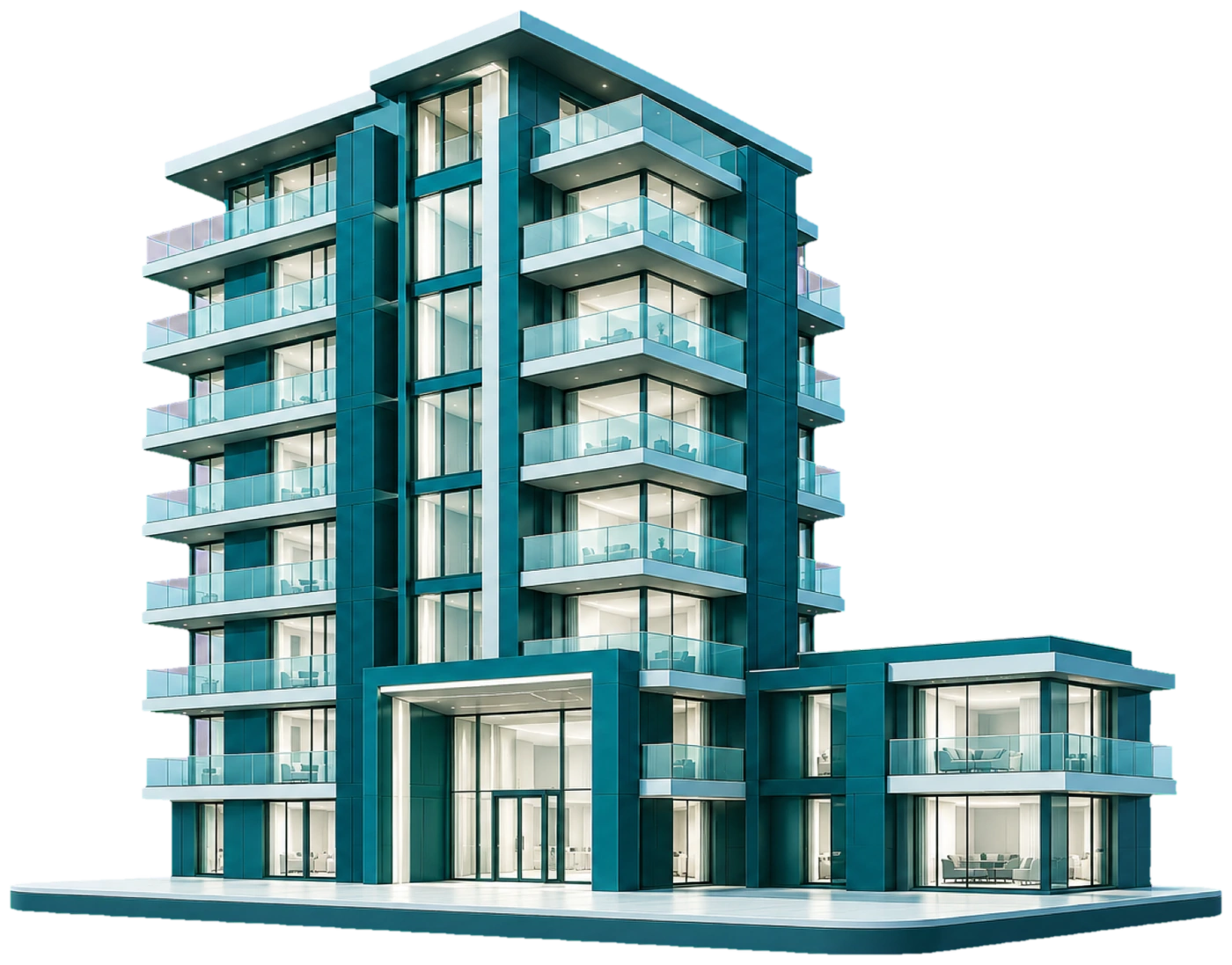
Yes, your condo corporation insures the building, but that does not mean you have nothing to insure. Under Ontario's Condominium Act, 1998, the corporation covers the units and common elements, yet you may be billed for its deductible, and you must insure your upgrades, belongings and liability yourself.
Key takeaways
- The corporation must insure the units and common elements against major perils such as fire and water escape.
- That insurance does not include improvements made to a unit. What counts as an improvement depends on the "standard unit" definition.
- If damage comes from your act or omission, or your tenant's, you can be charged the lesser of the repair cost and the corporation's deductible.
- Loss assessment coverage on your own policy is what pays that kind of bill. Limits vary by insurer.
- Read the declaration, by-laws and status certificate before you buy, not after a claim.
What the corporation insures
A condominium corporation is the legal body that runs the building. It is made up of all the unit owners, and a board of directors manages it. Section 99 of the Condominium Act, 1998 says the corporation must insure the units and common elements, on its own behalf and on behalf of the owners, against damage caused by "major perils". The Act lists them: fire, lightning, smoke, windstorm, hail, explosion, water escape, strikes, riots or civil commotion, impact by aircraft or vehicles, and vandalism or malicious acts. The declaration or by-laws can add other perils.
The Act also says the insurance must cover the replacement cost of the damaged property, subject to a reasonable deductible. A deductible is the part of a loss you or the corporation pay before the insurer pays.
This is called the master policy. It is not your policy. It does not insure your furniture, clothes or electronics, it does not protect you if you cause injury or damage to someone else, and it will not pay to live somewhere else while your unit is repaired. For the full comparison with other policy types, see our guide to condo vs. tenant vs. home insurance in Ontario.
Standard unit, improvements and betterments
The Act says the corporation's duty to insure does not include damage to improvements made to a unit. To decide what is an improvement, the Act looks at a "standard unit" for the class of unit you own. The standard unit is the one described in a by-law passed by the board for that purpose. If there is no such by-law, it is the one described in a schedule to the declaration.
In plain words: the standard unit is the basic version of your unit. Anything beyond it is an improvement, and you insure it. Insurers sometimes call these "improvements and betterments". Examples that often fall outside a basic standard unit are:
- upgraded flooring such as hardwood or heated tile
- custom kitchen cabinets, countertops and built-in appliances
- new bathroom fixtures and finishes
- built-in shelving, wall coverings and lighting upgrades
Standard unit definitions differ from one building to the next. Some are very basic, such as bare concrete and drywall. Others include more. A previous owner may also have renovated, and you can inherit that gap. The Act separately lets an owner and the corporation sign an agreement for an addition, alteration or improvement (section 98), and that agreement sets out who pays for repair and insurance. If your unit has one, read it.
The corporation's deductible and who pays it
Here is the part that surprises many owners. Under section 105, if the corporation's policy has a deductible, the part of the loss that falls under it is normally a common expense. That means all owners share it through their monthly fees.
There is an important exception. If an owner, the owner's tenant, or a person living in the unit with the owner's permission or knowledge causes damage to the unit through an act or omission, the amount added to that unit's common expenses is the lesser of two things: the cost of repairing the damage, and the deductible limit of the corporation's policy. A board can also pass a by-law to extend the situations in which this charge applies, as long as the damage was not caused by the corporation or its directors, officers, agents or employees.
Picture a Toronto owner whose dishwasher hose bursts while they are away. The corporation's insurer pays for the repairs to the units and common elements, minus the deductible. If the corporation's deductible is the lower figure, the owner could be charged that deductible. If the repair cost is lower than the deductible, the owner is charged the repair cost. Whether the owner then recovers that money depends on their own policy.
The amount of the deductible varies by building and by year. Corporations choose it, and it can change at renewal. Do not assume it is small. You can see the current figure in the corporation's certificate of insurance.
What loss assessment coverage does
Loss assessment is a part of condo owner insurance (often called a condo unit owner policy) that helps pay a charge the corporation puts on you for a loss. Under section 105(4) of the Act, the amount an owner pays under this section is an insurable interest, meaning you are allowed to insure against it.
Check how your policy words it, because insurers differ. Questions that matter:
- Does it cover the deductible charge in section 105, or only other kinds of assessments?
- Is the limit shared across all assessments, or is there a separate limit for deductible charges?
- Does it apply only to losses from certain perils, such as fire or water?
- Is there its own deductible?
If you also want protection when your own act or negligence causes damage, personal liability coverage on the same policy usually responds to claims by neighbours or the corporation. Water damage is the most common source of these bills, and we cover it in water damage and sewer backup insurance in Ontario.
What to read before you buy: declaration, by-laws and status certificate
A buyer or owner can ask the corporation for a status certificate (section 76). The corporation must provide it within 10 days of the request and payment of the fee. It includes copies of the declaration, by-laws and rules, and a certificate or memorandum of insurance for each current policy. It also states amounts that the Act requires to be added to the unit's common expenses.
A quick checklist when you read these documents:
| Where | What to look for |
|---|---|
| Certificate of insurance | The corporation's deductible, the perils covered, and the limits |
| Declaration and by-laws | The standard unit definition, and any by-law that extends who pays the deductible |
| Status certificate | Unpaid fees, extra charges on the unit, legal actions, and the reserve fund status |
| Budget and financial statements | The insurance cost and recent increases |
| Any improvement agreement | Who repairs and insures the change |
Also notice whether the building has had recent claims or large increases in insurance cost. Those can signal higher deductibles or special charges later. If you are buying your first place, our guide to first-time home buyer insurance in Ontario walks through what to arrange before closing. Your lender may also require proof of condo insurance.
Recommended limits and what to ask your broker
We cannot give you one dollar amount, because the right limits depend on your unit, your belongings and your building. A practical way to set them:
- Loss assessment: find the corporation's deductible and choose a limit at least that high. Consider more if the reserve fund is low or the building is old.
- Improvements and betterments: estimate what it would cost to replace everything beyond the standard unit. Choose a limit that covers it, based on replacement cost.
- Contents: add up what you own and insure it at replacement cost, if available.
- Personal liability: compare options with your broker. Many owners choose higher limits than the basic one.
- Additional living expenses: ask how long and how much it covers if you cannot live in your unit.
Questions to bring to your broker (brokers in Ontario are licensed by RIBO):
- Does my loss assessment cover the corporation's deductible charge, and what is the limit?
- How do you value my improvements, and is it replacement cost?
- Can you review the corporation's insurance certificate and standard unit definition with me?
- What is my own deductible, and is there a separate one for water damage?
- What is excluded, such as sewer backup or overland water, and can I add it?
You can also read about the product on our condo insurance page.
Before you act
- Request the status certificate and read the insurance certificate first.
- Find the standard unit definition in the by-laws or declaration, and take photos of your unit's finishes.
- Match your loss assessment limit to the corporation's deductible.
- Update your improvement values after any renovation.
- Tell your broker if you rent out the unit, because a tenant's act can lead to a charge on you.
This article is general information, not advice. The Act can be amended, and each corporation has its own documents, so confirm details with a lawyer or broker. Reviewed October 2026.